Content
Wheel end components are the group of parts located at the junction of the wheel, suspension, and drivetrain — directly responsible for load transfer, wheel rotation, braking accuracy, and steering response. The core products in this category include wheel bearings (hub bearings), rear axle supports, and wheel mounting flanges. Each plays a distinct structural role, and failure in any one of them compromises vehicle safety. For procurement teams, understanding these components at a technical level is the foundation for evaluating supplier capability and making sound sourcing decisions.
Wheel end components refer to the assembly of parts that interface between the rotating wheel and the fixed chassis or axle structure. In practical terms, this category covers three primary product types:
These components apply across passenger cars, light commercial vehicles, ATVs, and off-road platforms. Because they operate under continuous dynamic stress — absorbing road vibration, supporting braking torque, and bearing vehicle weight — dimensional precision and material traceability are non-negotiable requirements at every stage of production.
Understanding the functional role of each part helps procurement teams align specifications with real-world performance requirements.
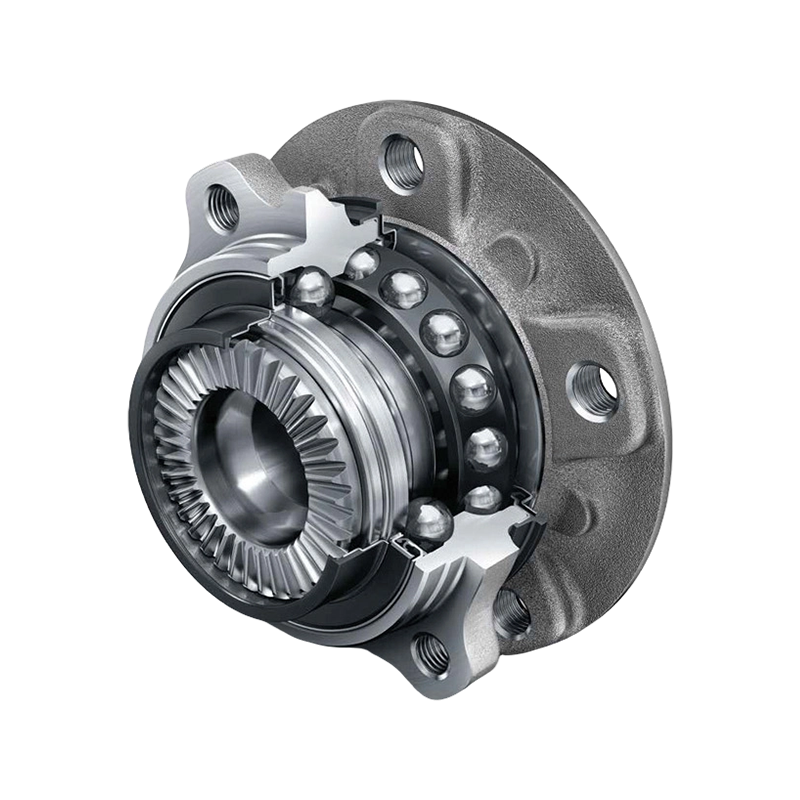
The hub bearing carries both the static weight of the vehicle and the dynamic lateral forces generated during cornering. In vehicles equipped with ABS, the integrated encoder ring transmits wheel speed data to the electronic control unit at a rate sensitive enough to detect differences in wheel rotation measured in milliseconds. Bearing preload tolerance directly affects operating noise and service life — excessive preload generates heat; insufficient preload causes play and premature wear. Both conditions lead to early failure.
The rear axle support manages the transfer of braking and traction forces from the axle to the vehicle structure. In multi-link and torsion beam rear suspension designs, the support geometry determines wheel alignment parameters — toe and camber — under load. Deformation under stress is a critical failure mode; components must meet defined tensile strength and fatigue cycle standards for the intended vehicle platform.
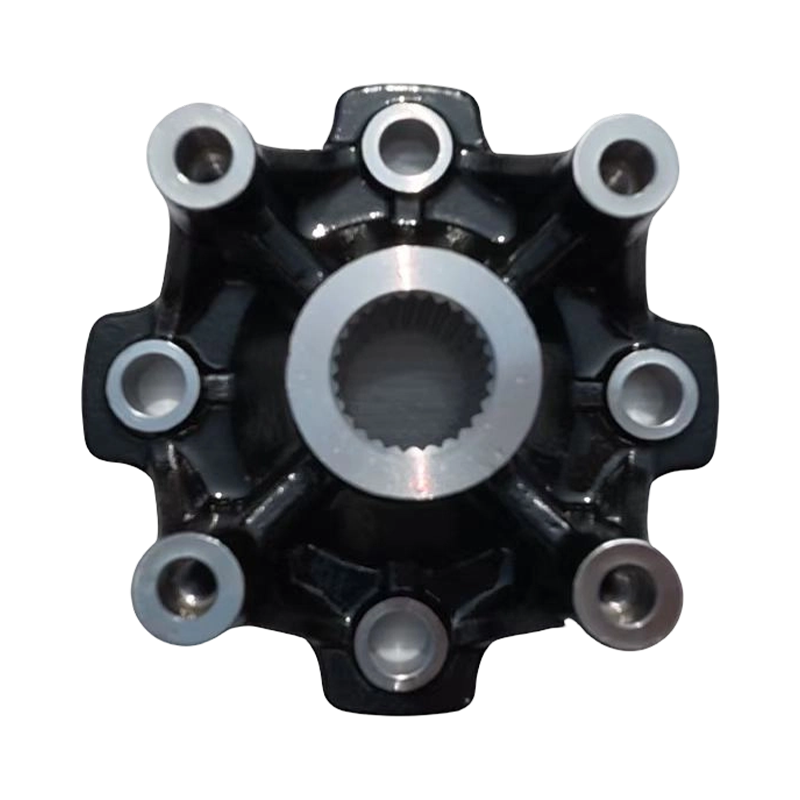
The wheel mounting flange connects the hub to the wheel. Flange face runout — the degree to which the mounting surface deviates from a perfect plane during rotation — must be controlled within tight tolerances. Even minor runout contributes to brake rotor distortion and steering wheel vibration at highway speed. Stud hole position accuracy determines whether wheel studs experience uneven load distribution, which accelerates fatigue cracking at the thread root.
Wheel end component specifications vary considerably depending on the vehicle platform. The table below summarizes typical requirements to support specification alignment during sourcing:
| Vehicle Segment | Primary Components | Key Performance Requirements |
|---|---|---|
| Passenger Car | Hub bearing, wheel mounting flange, ABS ring | Low noise, long service life, ABS signal accuracy |
| Light Commercial Vehicle | Heavy-duty hub bearing, rear axle support, wheel flange | High load capacity, fatigue resistance under cyclic stress |
| ATV / UTV / Off-Road | Reinforced hub bearing, sealed bearing assemblies | Impact resistance, dust and moisture sealing |
| Truck / Light Truck | Rear axle support, high-load wheel flange | Structural rigidity, dimensional stability under payload |
Because wheel end components are safety-critical parts, quality control cannot rely solely on final inspection. Process control at each manufacturing stage is what separates reliable suppliers from those who only screen for defects at the end of the line. Key control points include:
IATF 16949 certification is the primary quality system standard for automotive component suppliers. It mandates design and development controls, production process management, and continuous improvement discipline across the supply chain — making it the baseline expectation for sourcing wheel end components at production scale.
B2B buyers evaluating suppliers for wheel end components should look beyond catalog availability and unit pricing. The following criteria directly affect downstream quality and supply reliability:
For buyers sourcing wheel end components for specific vehicle platforms or special applications, a structured development process is the most reliable path to production-ready parts. A well-managed workflow typically follows these steps:
This structured approach applies whether the requirement is a single component type or a full wheel end assembly covering bearing, flange, and axle support as an integrated supply program.
Provide the OEM part number, vehicle year, make, and model to the supplier. Manufacturers with OEM supporting experience maintain cross-reference databases and can confirm dimensional fitment before production. Where drawings are available, dimensional comparison against the OEM specification is the most reliable verification method.
IATF 16949 is the primary automotive quality system standard and should be the baseline requirement for safety-critical component categories. ISO 9001 provides a general quality management foundation. For export markets, RoHS compliance and application-specific test reports may also be required depending on destination regulations.
Yes. Complete hub bearing assemblies — integrating the bearing, flange, and ABS ring as a single unit — are common in aftermarket distribution because they reduce installation complexity. Individual components are more typical in OEM line supply or repair kit formats. Discuss assembly configuration requirements with your supplier early in the sourcing process to ensure the product format matches your downstream needs.
The most common causes are insufficient sealing against moisture and contamination, incorrect bearing preload during assembly, and overloading beyond the component's rated capacity. Material quality and heat treatment consistency during manufacturing are also significant factors — inadequate case hardening depth leads to spalling of bearing raceways under cyclic load, which is a common failure mode in lower-quality aftermarket parts.
1-949-870-6672
No. 169 Songpu Road, Cidong Industrial Zone, Cixi City, Ningbo City, Zhejiang Province, China
OEM/ODM Automotive Chassis Sealing Components Manufacturer
EV Drivetrain Components Supplier