
 English
 中文简体
中文简体 عربى
عربى Español

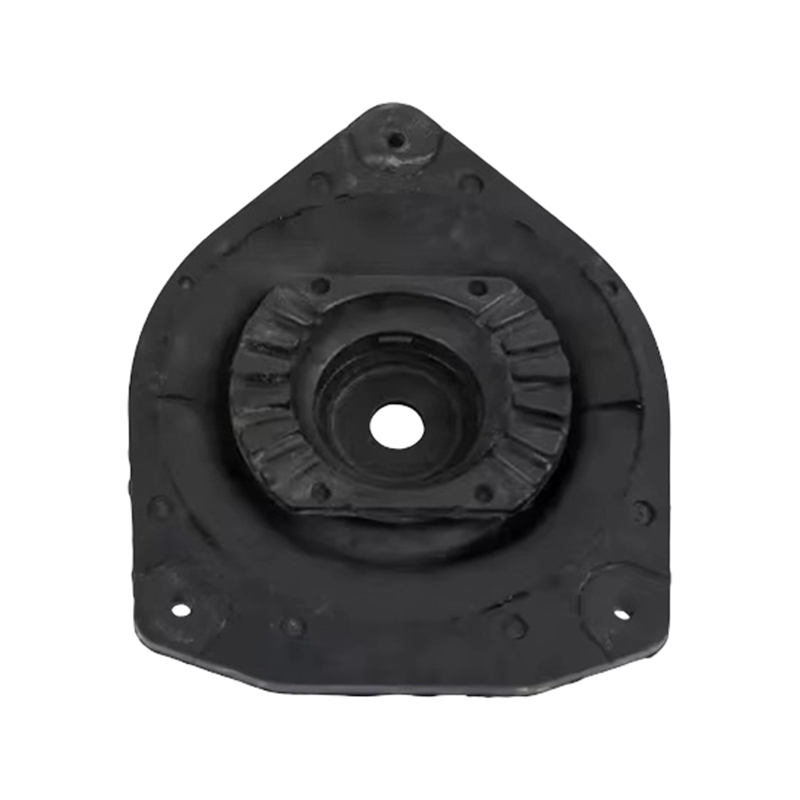
As a dynamic, innovation-driven precision machinery enterprise, Cixi Quaconst Precision Machinery is a China Wholesale Strut Mount Manufacturer and Strut Mount Factory, dedicated to the R&D, manufacturing and sales of precision components for automobiles, ATVs and trucks since its establishment, with full capabilities in import and export operations. We have also set up a new branch in Vietnam to expand our global service network, delivering more accessible support to international clients.
Our headquarters is strategically located in Cixi Binhai Economic Development Zone, Ningbo City, Zhejiang Province, China. This location boasts convenient transportation and superior maritime logistics advantages—laying a solid foundation for our efficient global supply chain and timely customer support, ensuring products reach global markets quickly.

INQUIRY NOW
Wholesale Strut Mount
We specialize in the R&D and manufacturing of sealing, protection, and vibration-damping components for automotive chassis and drivetrain systems. Our product portfolio includes a comprehensive range of protective parts—such as CV boots, steering rack boots, and TPEE boots—as well as shock-absorbing and cushioning components, including strut mounts, suspension bushings, and driveshaft dampers. We provide integrated, end-to-end solutions for CV axle assemblies, steering systems, and suspension systems, serving the global passenger and light commercial vehicle markets.
Cixi Quaconst Precision Machinery:
Guarantee High Quality With Our Expertise
Guarantee High Quality With Our Expertise

-
Quality
We have our own testing lab and the most advanced and complete inspection equipment,which can ensure...
-
Customization
We have a strong R&D team,and we can develop and produce products according to the drawings or s...
-
Multiformity
We have over 1300 molds, and our parts can be matched with most of the best-selling car models world...
Certificate
-
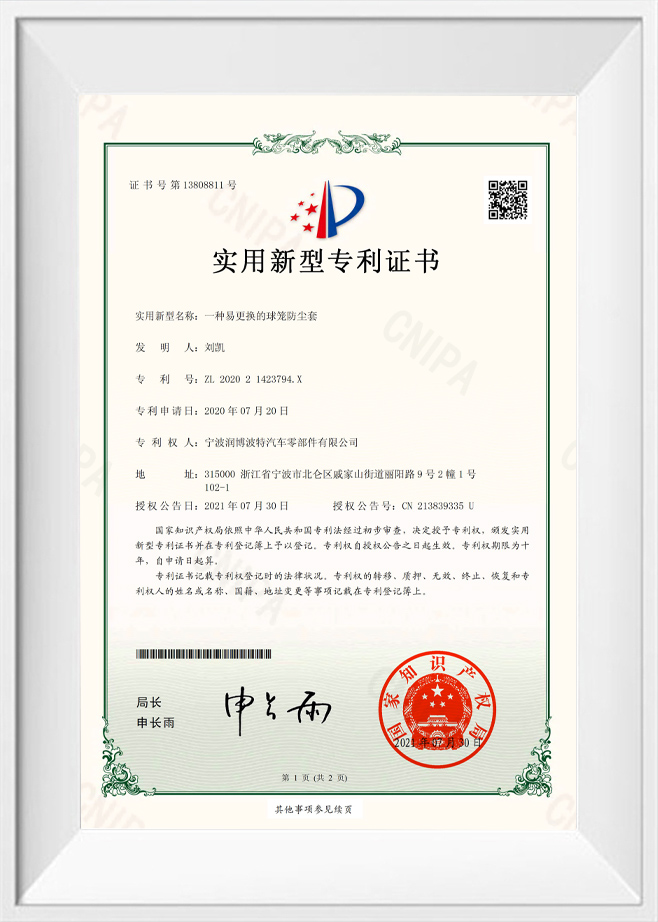
Utility Model Patent Certificate
-
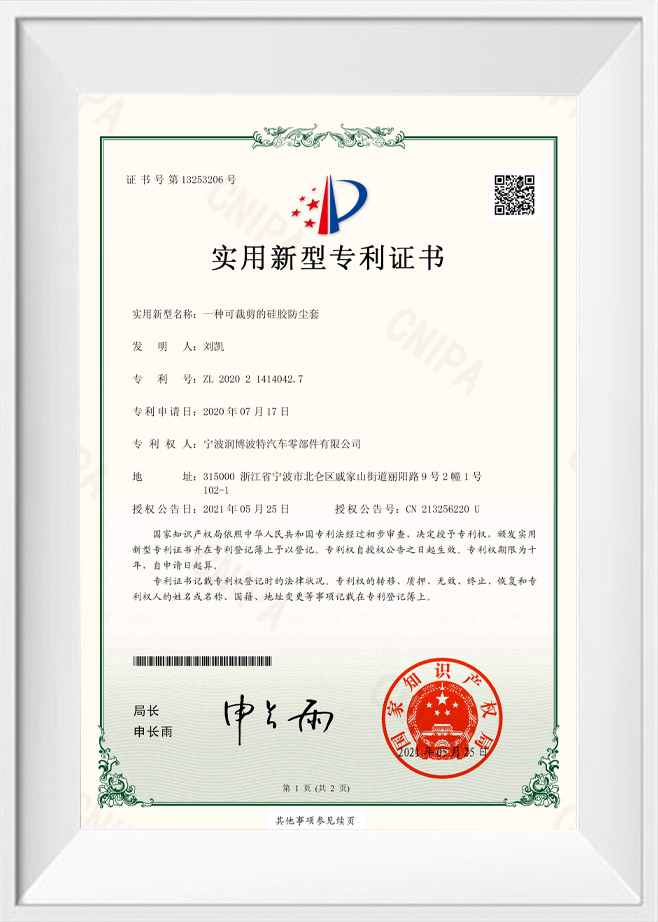
Utility Model Patent Certificate
-
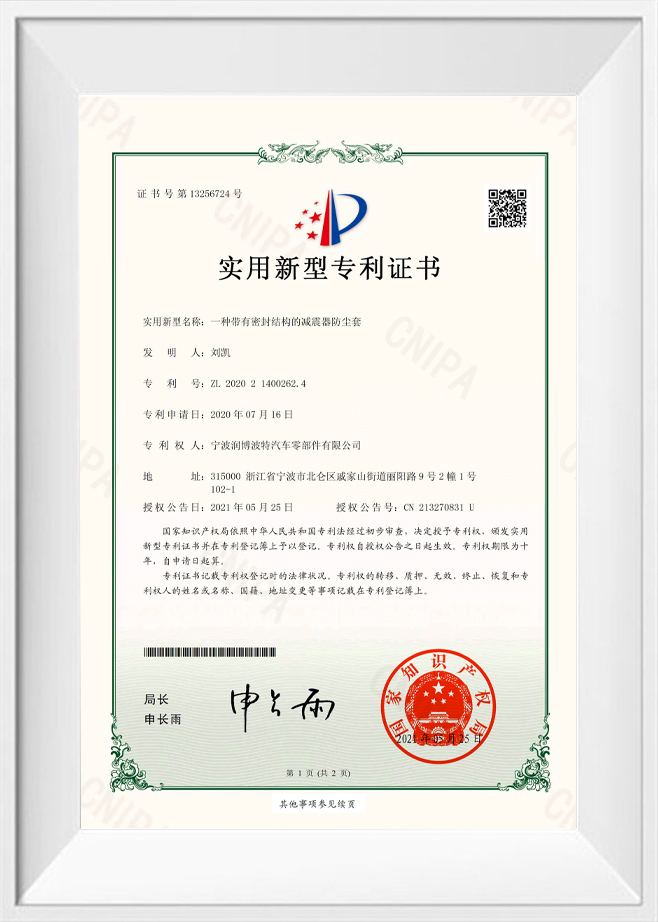
Utility Model Patent Certificate
-
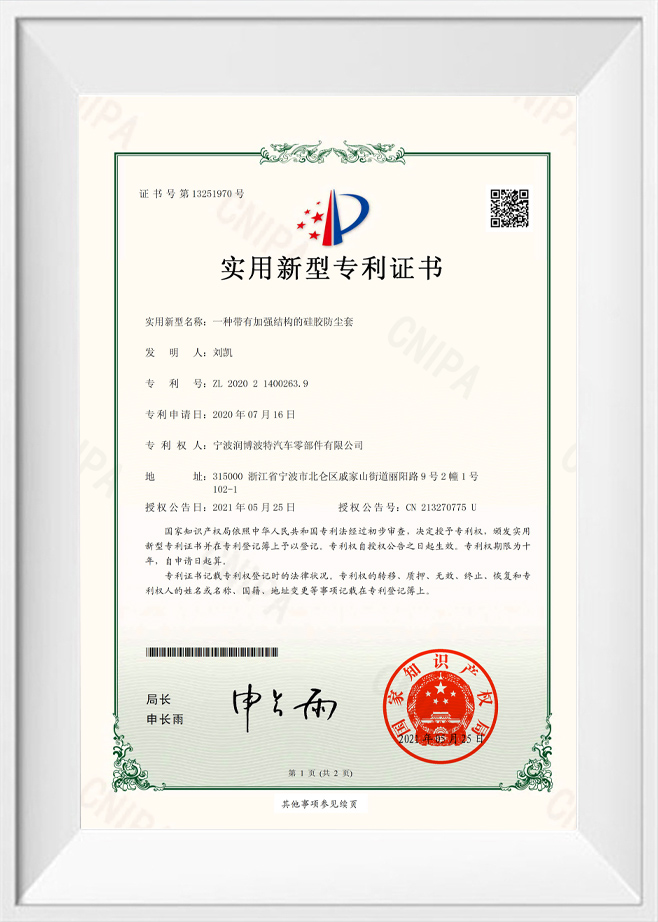
Utility Model Patent Certificate
-
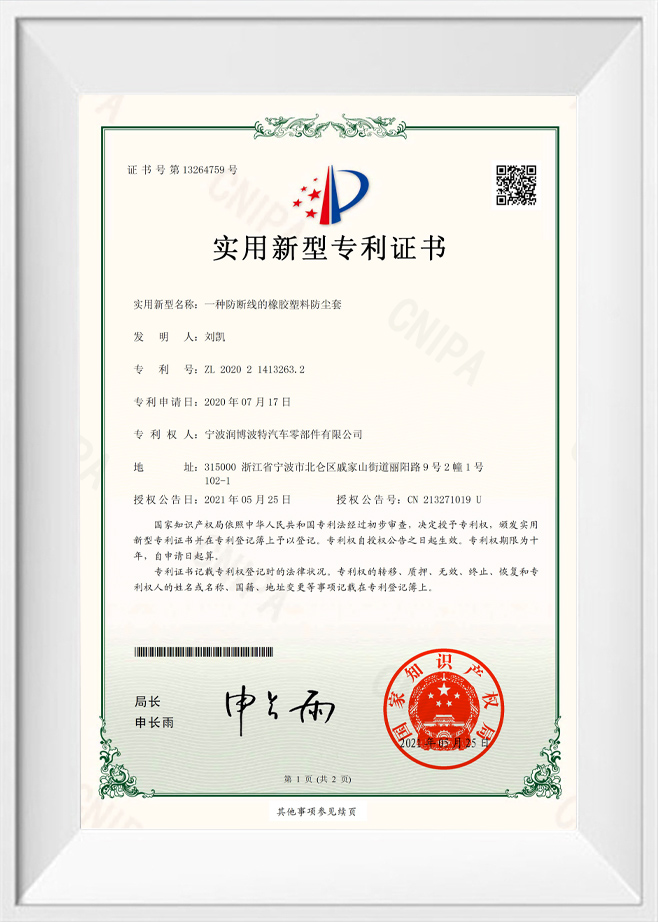
Utility Model Patent Certificate
News Center
-
2026-10-23
Automotive Driveline Guide: Components, Tolerances, Failure Points & Sourcing Checks
A front-wheel-drive car that shudders between 40 km/h and 70 km/h usually traces back to one of four parts: a worn outer CV joint, a boot that has thrown its g... -
2026-10-16
what is a driveline: Applications, Selection Criteria, and Practical Guidance
A front-wheel-drive car carries torque from the transmission to the tires through roughly a dozen parts: two half shafts, four constant-velocity (CV) joints, t... -
2026-10-09
Signs of a Bad Driveshaft: 6 Symptoms, Road Tests and Replacement Guide
A car that shudders at highway speed usually gets new tyres and a wheel balancing first. The money is spent, and the shudder stays. A worn driveshaft has its o... -
2026-10-02
How to Balance a Driveshaft: Correct Steps, Tolerances and Common Mistakes
A pickup that shakes hard at 55 mph and smooths out completely at 45 mph is almost always fighting driveline unbalance, not a bad tire. The usual culprit is a ...
Strut Mount Industry knowledge
A strut mount is the upper connecting point between a MacPherson strut assembly and the vehicle body, performing three simultaneous functions: bearing the vehicle's corner load, isolating road vibration from the cabin, and providing a pivot bearing to allow the strut to rotate during steering. It is used across a wide range of passenger vehicles in the global aftermarket, including applications as a strut mount for compact sedans, SUVs, and light commercial vehicles from multiple mainstream platforms. Because the rubber insert and steering bearing degrade over time, strut mounts are a high-frequency replacement category in both OEM service and the AM aftermarket.
Application Across High-Volume Vehicle Platforms
Strut mount design and fitment requirements vary significantly by vehicle platform. Mounting bolt pattern, bearing bore, overall height, and rubber compound stiffness are all model-specific. The table below illustrates the key fitment variables across three representative high-volume vehicle segments:
| Vehicle Segment | Typical Bolt Pattern | Bearing Type | Primary Application Focus |
|---|---|---|---|
| Compact sedan / hatchback | 3-bolt or 4-bolt | Sealed thrust bearing | Ride comfort, vibration isolation |
| Mid-size sedan / crossover | 3-bolt or 4-bolt | Integrated ball bearing | Steering precision, load bearing |
| SUV / light commercial | 4-bolt or 5-bolt | Heavy-duty thrust bearing | Higher load capacity, durability |
For aftermarket distributors serving mixed vehicle populations, maintaining coverage across these segments — including popular models from Japanese, American, and European platforms — is essential for achieving acceptable fill rates on strut mount orders.
Quality Control: What Separates Reliable Strut Mounts from Inferior Alternatives
Strut mount quality is determined by four interdependent factors. Weakness in any single area leads to premature failure and increased warranty exposure:
- Rubber compound specification: The elastomer insert must maintain its elastic properties across the expected operating temperature range and resist compression set under sustained load. Shore A hardness should be documented and batch-controlled.
- Bearing quality: The integrated steering bearing should be pre-greased and sealed, and validated for the rotational load cycles typical of the target vehicle segment.
- Metal bracket integrity: Stamped steel brackets require adequate surface treatment — such as zinc plating or e-coating — to resist corrosion, particularly for markets with heavy road salt use.
- Dimensional accuracy: Mounting bolt hole position, bearing bore concentricity, and overall height must be verified against OEM references to ensure correct strut geometry after installation.
CIXI ZHIHENG manufactures strut mounts with production and inspection equipment covering rubber molding, vulcanization, precision metal machining, and assembly — operating under an IATF 16949-compliant quality management system that covers process control, inspection traceability, and continuous improvement across the full production cycle.
Customization and OEM Fitment Development Process
Strut mounts are highly vehicle-specific. Custom fitment development for a new vehicle application follows a structured process:
- Fitment Data Collection: Customer provides OEM part number, reference sample, or technical drawing with key dimensions (bolt pattern, bearing bore, rubber insert geometry, overall height)
- Engineering Review: Rubber compound selection, bearing specification, and stamped bracket tooling scope confirmed based on vehicle load rating and operating environment
- Sample Production: Pre-production samples submitted for customer dimensional inspection and vehicle fitment validation
- Performance Validation: Static load, rubber aging, and bearing rotation tests completed before mass production approval
- Mass Production: Stable supply with agreed packaging, labeling, and delivery schedule
Procurement FAQ for Strut Mounts
Should strut mounts always be replaced in pairs?
Yes. Replacing only one side introduces asymmetric suspension stiffness, which can affect straight-line stability and brake balance. Industry practice is to replace both front strut mounts simultaneously, and to inspect the rear mounts at the same time if the vehicle has rear struts.
What information is needed to cross-reference a strut mount to an OEM part number?
Provide the vehicle make, model, engine variant, and production year. Where possible, include the OEM part number from the original mount. Key dimensional parameters — bolt pattern diameter, bearing bore, and free height — allow cross-referencing even when an OEM number is unavailable.
What are the typical signs that a strut mount needs replacement?
Common indicators include clunking or knocking sounds from the suspension during cornering or over road irregularities, increased steering effort or imprecise steering return, visible cracking or deformation of the rubber insert, and bearing roughness or play detectable during a wheel-off inspection. When any of these symptoms are present, the mount should be inspected and replaced as needed regardless of mileage.
Can strut mounts be supplied with private labeling for aftermarket distributors?
Yes. Most manufacturers serving the global aftermarket can accommodate private-label packaging with custom part number formats, multilingual labels, and distributor-specific carton configurations. Minimum order requirements for private-label programs vary by supplier and SKU volume.
GET IN TOUCH
MAIL US
CONTACT US
+86 133 0665 0391
MAIL US
No. 169 Songpu Road, Cidong Industrial Zone, Cixi City, Ningbo City, Zhejiang Province, China
Copyright Cixi Quaconst Precision Machinery Co., Ltd All Rights Reserved.
 Wholesale Strut Mount Manufacturer
Wholesale Strut Mount Manufacturer
Copyright Cixi Quaconst Precision Machinery Co., Ltd All Rights Reserved.